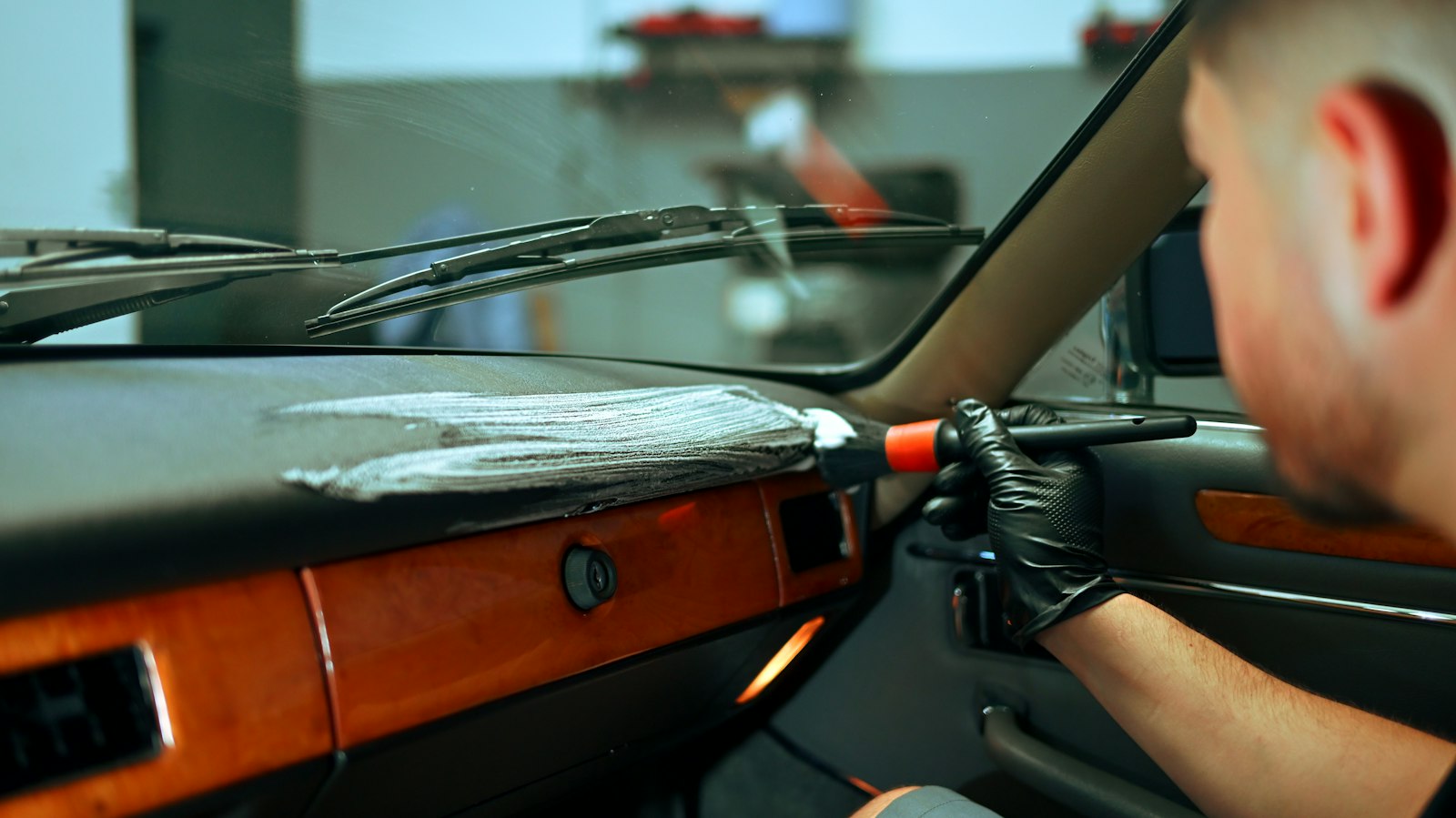
Soft boar-hair suits dust in vents and seams; firmer synthetic suits crevices and heavier grime. Screens follow the vehicle maker’s instructions, and brushes stay dedicated to one job.
Match the bristle to the surface
Which surface is the brush actually for? Listings describe two broad bristle families, and the answer starts there: soft natural boar hair is marketed for vents, dash crevices and dust pick-up where a scratch-safe touch matters, while firmer synthetic nylon is positioned for seams, textured plastic and heavier grime. Retailers such as California Car Cover sell sets that pair both, which reflects the real split in jobs.
The useful check is not the set size but whether each brush has a stated job that matches a surface you actually have. A three-brush set with clear roles covers the same ground as a ten-brush set without roles.
| Brush type | Stated fit | Treat with caution on |
|---|---|---|
| Soft boar hair | Vents, dash crevices, dust around buttons and seams. | Soft coatings and displays; follow the vehicle maker. |
| Firmer synthetic | Textured plastic, seams, heavier settled grime. | Soft-touch coatings and any surface that scratches visually. |
| Specialty vent brushes | Slatted vents and recessed grilles. | Check bristle stiffness before use near trim finish. |
Screens: follow the vehicle maker
Touchscreens and displays are the one interior area where the owner manual outranks any detailing product. Toyota’s interior care guidance warns against detergents that can discolor or streak interior surfaces, and Honda’s Civic manual warns against alkaline and organic solvents on its interior, directing owners to a damp cloth approach.
That wording matters for brushes: a dry soft brush for loose dust is one thing, but any brush used with pressure or with a cleaner on a display is following a detailing habit, not the vehicle maker’s instructions. When in doubt, the manual’s method wins.
Handles, size and reach
Around trim and panels, metal-free handles are a sensible baseline, and listings for brush sets such as Detail Dudes’ boar-hair trio call out metal-free plastic handles alongside a stated role for each brush: a wet job brush, an interior wet brush and a fine dust brush.
Size should follow the recess. Long, slim brushes reach vent slats and seat rails; broader brushes cover door pockets and dash tops faster. If a brush cannot reach the recess without bending at the handle, it is the wrong shape for that job regardless of bristle quality.
Keep brushes dedicated and clean
A brush that has touched wheel cleaner or tire rubber should not return to dash duty. Keep interior brushes separate from wheel and engine brushes from their first use, and rinse interior brushes with water after sessions where they picked up cleaner residue. The shelf logic matches the wash tool storage guide; the kit-level view is in the interior cleaning kit guide.
The rinse is the whole care routine for most interior brushes: work water bristle-deep so residue does not dry at the base, reshape the tuft with your fingers, and let them air dry standing on the handle or flat — whatever keeps the bristle shape. If a brush was used with an actual cleaner, one gentle pass with a drop of mild detergent and a thorough rinse removes the film that stiffens bristles later.
Replacement follows evidence: bristles that splay permanently, shed, or carry a residue smell after washing have stopped being a safe interior tool. That judgment is the same one the towel guide uses, and the two habits reinforce each other. For flat recesses where a brush is the wrong shape, the cleaning gel guide covers where gel fits instead.
Common questions
Are boar hair brushes safe on touchscreens?
Treat screens as a manual question, not a brush question. Toyota’s interior guidance warns against discoloring detergents, and Honda directs Civic owners to a damp cloth; neither implies pressing a brush against a display. Use a dry soft brush for loose dust only if the vehicle maker’s method allows, and never scrub.
Can one brush do wheels, trim and the dashboard?
Keep them separate from day one. A brush that has touched wheel cleaner or tire rubber carries residue back to interior surfaces. Dedicate interior brushes to interior jobs, rinse them after sessions, and store them apart — the same cross-contamination rule the wash tools follow.
How many brushes does an interior setup need?
Fewer than most sets suggest. Three stated roles cover the real jobs: a fine dust brush for vents and seams, an interior wet brush for cleaner-assisted areas, and a broader brush for dash tops and pockets. Buy by role and surface fit; set size is marketing, not coverage.
Sources & research notes
This guide draws on the published material below. We have not performed a hands-on or long-term test of the products discussed. Check current instructions for the exact product and your vehicle.
- California Car Cover: interior detail brush set with boar hair and nylon
- Toyota: cleaning and protecting the vehicle interior (2024 RAV4 owner’s manual)
- Honda: 2025 Civic interior care (owner’s manual)