A correction compound like Meguiar’s Ultimate Compound addresses clear-coat-level defects — light scratches, swirls, oxidation. Anything deeper is paint repair, and trim scratches are a different product family entirely.
Identify which layer the scratch is in
Run a fingernail across the mark. If the nail glides over, the defect likely sits in the clear coat — the layer a correction compound is built for. If the nail catches and the mark reads white or grey against the paint, the scratch has gone deeper than clear coat, and no bottle on a retail shelf will fill it.
That boundary matters more than any brand. Meguiar’s describes Ultimate Compound as a clear-coat-safe paint correction compound for scratches, swirls and oxidation — clear-coat-safe is the scope of the claim. A scratch through the clear coat into colour or primer needs professional paint repair.
| What you see | Fit response |
|---|---|
| Swirls, light scratches, dull oxidation | Correction compound, worked section by section — see the product families below. |
| Mark your fingernail catches, white or grey | Professional paint repair. A compound will not fill a defect below the clear coat. |
| Scuff on black plastic trim | Trim products, not paint compound — the trim guide covers the three families. |
| Wax or residue transfer that wipes off | Neither compound nor repaint — a proper wash and decontamination first (the wash kit guide). |
The correction compound family
Within clear-coat-safe products, Meguiar’s Ultimate Compound is a documented example of the correction family: the listing states it removes light scratches, swirls and oxidation while adding gloss, using micro-abrasive technology, applied by hand or dual-action polisher. The family’s job is levelling the clear coat surface so the defect stops reading as a line.
Correction is not protection. After defects are corrected, the panel still needs a protective layer — wax, sealant or coating — because bare, freshly compounded clear coat has just had its surface worked. That two-step order is the part beginners skip.
Hand or dual-action polisher
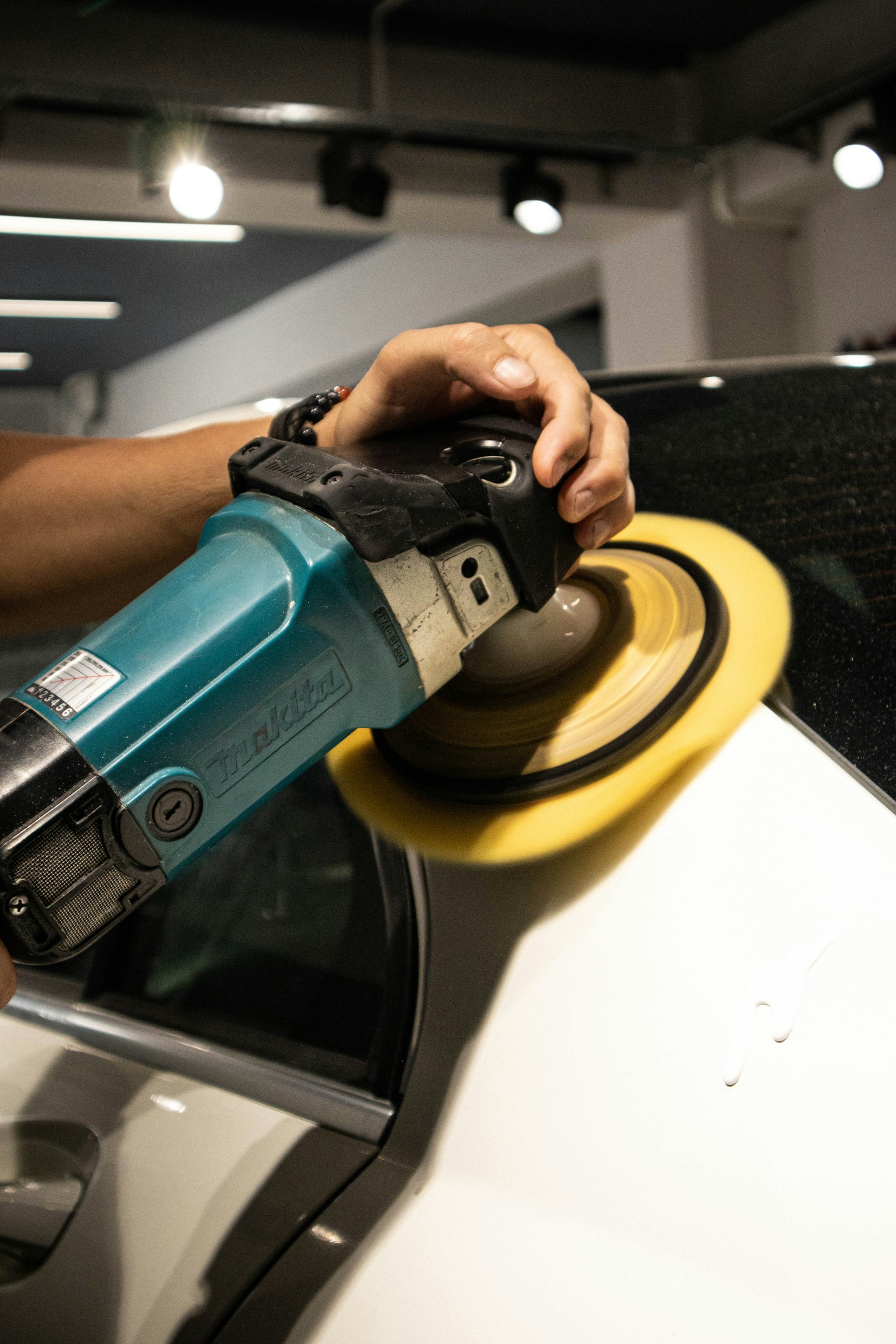
Meguiar’s directions cover both. Hand application with an applicator pad suits isolated defects and small panels; a dual-action (DA) polisher suits larger areas because the machine keeps the pad moving and the pressure consistent. A rotary polisher is a professional tool — heat and momentum can chew through clear coat fast, and the listing’s clear-coat-safe claim assumes its own application guidance.
Either way, the working pattern from the directions is the same: cool surface, out of direct sunlight, work in sections, buff until the defect clears, wipe residue with a clean microfiber towel — then judge in daylight before repeating.
Where compound sits among polish and wax
The three-bottle shelf confuses people because the labels overlap, so the working distinction is by job. A correction compound carries the abrasives: its job is levelling the clear coat so defects stop reading as lines. A polish is a maximizing step — refining gloss after correction. A wax or sealant is the protection layer that neither of the other two provides.
Meguiar’s own directions for Ultimate Compound place it as the correction step — applied by hand or dual-action polisher until the defect clears, residue wiped off — with protection to follow. Skipping straight to wax over a scratched panel hides nothing; the defect is still there under the shine.
Set expectations by defect type
The honest scoreboard: swirls and oxidation respond well; light clear-coat scratches improve but may not vanish; deep scratches get smaller, not gone. We have not tested compound on any specific paint, and results vary with paint type, defect depth and technique.
Record before and after in daylight — the same photograph habit the headlight guides recommend. If the defect still reads after two careful passes, more compound is not the answer; the defect is below the layer the product works on.
- Match the defect to the layer before buying anything.
- Correction first, protection second — never skip the second.
- Hand or DA polisher per the directions; leave rotary to professionals.
- Photograph in daylight and stop after two honest passes.
Common questions
Can a scratch remover fix deep scratches?
No. Correction compounds work on the clear coat, the outermost layer. A scratch deep enough to catch a fingernail, read white against the paint, or expose colour and primer needs professional paint repair — Meguiar’s clear-coat-safe claim describes the product’s scope, not a cure for every scratch.
Should I apply by hand or dual-action polisher?
Meguiar’s directions cover both. Hand application suits isolated defects and small panels; a dual-action polisher suits larger areas with more consistent pad movement. Whichever you use, work on a cool surface in sections and wipe residue with a clean microfiber towel.
Do I still need to wax afterwards?
Yes. Compounding corrects defects but leaves freshly worked clear coat with no protective layer. Finish the panel with wax, sealant or coating after correction — correction first, protection second, in that order.
Sources & research notes
This guide draws on the published material below. We have not performed a hands-on or long-term test of the products discussed. Check current instructions for the exact product and your vehicle.
- Meguiar’s: Ultimate Compound official product page
- Meguiar’s Ultimate Compound listing (observed November 4, 2026)