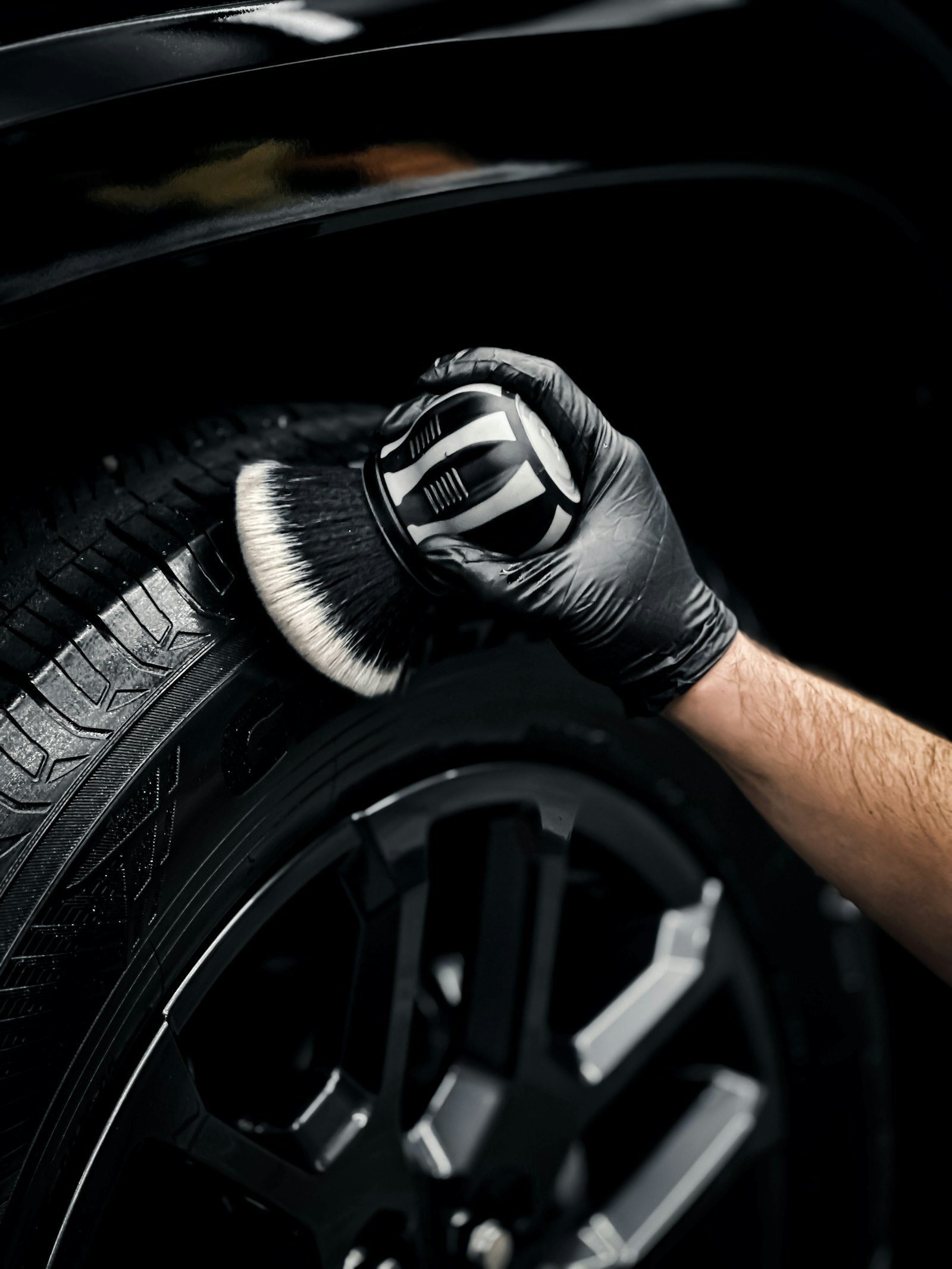
Cross-contamination is the expensive failure: keep wheel tools away from paint towels. Dry everything before it goes on the shelf, and replace on evidence.
Separate tools by job
Where do your wheel brushes live? If they share a bin with paint towels, that is the costliest storage mistake on the shelf — and it stays invisible until it scratches. A mitt or brush that has touched wheels, tires or lower panels carries grit that does a brake rotor’s job on clear coat. Commercial detailing guidance is blunt about this: Kleen-Rite’s care guide for wash operations separates towels by task, soil level and chemical exposure precisely to prevent that transfer.
The storage rule follows: paint towels, wheel tools and interior tools live in separate places from their first day. A tool that has been demoted to wheels stays demoted; the sorting guide from The Rag Company makes the same category separation the basis of towel storage.
Dry and rinse before storage
Damp microfiber sealed in a bin develops odor and can mildew; damp brushes lose bristle shape at the ferrule. Air drying after each session — the same drying guidance the towel makers give for laundering — is what makes storage safe, and breathable storage (open bins, pegs, hooks) beats airtight boxes for anything not fully dry.
Buckets and wash mitts need the same attention: a bucket left with dirty water becomes a grit cake, and a mitt left crumpled holds moisture in its pile — empty, rinse and air dry at the end of the session. Brushes need a deep rinse after cleaner-heavy sessions so residue does not dry at the bristle base, and wheel brushes get their own drying spot where grabbing them for paint work is physically awkward.
What “demoted” means in practice
Demotion is a shelf habit with three concrete rules. First, the physical separation: wheel tools live in their own container, so reaching for one during a paint job is a deliberate act rather than a grab. Second, the one-way direction: a towel or mitt moved down to wheels, tires or jambs never moves back up, no matter how clean it looks after washing.
Third, the honest label: mark demoted tools however it suits the shelf — a different bin, a tape band, a separate hook. The system works because it removes the moment where a faded-but-clean-looking towel gets used on a bonnet by mistake. That mistake is invisible at the moment it happens and expensive at the next wash.
Where new purchases land
Every new tool gets its shelf assignment on the day it arrives, not after its first job. A new towel unwraps, goes to the task bin it was bought for, and its demotion path is already decided: paint towel, then wheel towel, then bin. New brushes start interior-side or wheel-side and stay there. Deciding at arrival is what keeps the separation real — deciding later is how a good towel ends up on a wheel and ruins the system.
This is also the answer to bundle purchases: a seventeen-piece kit arrives as one box but must leave the unboxing as twelve separate shelf assignments. The first wash kit guide lists the itemised-contents check that feeds this step.
Audit before you buy replacements
Tool shelves drift: duplicates accumulate while a needed gap stays open. Once a season, lay out the wash tools, check each against the job list — washing, rinsing, drying, wheels, interior — and note what is worn, what is duplicated and what is genuinely missing.
The audit turns replacement into evidence-based buying: a mitt that has hardened, a brush that sheds, a towel demoted past further use are visible facts. That is the same replacement logic the microfiber guide applies to towels, and the job list it references is the one the first wash kit guide helps you write. A ten-minute audit with a notepad usually ends with a smaller shopping list than expected — and a shelf where every tool has a place it earned.
- Separate paint, wheel and interior tools from day one.
- Air dry everything; store in breathable containers.
- Rinse brushes deep; keep wheel tools in their own spot.
- Audit the shelf each season; buy from the gaps, not the habit.
Common questions
Can I reuse a wheel brush on paint after washing it?
Keep them separate even after washing. Washing removes residue you can see, but the safe habit is task-dedicated tools: wheel brushes stay wheel brushes, and their storage spot should make accidentally grabbing one for paint physically awkward. Cross-contamination is the expensive failure this guide exists to prevent.
Should tools be stored sealed or open?
Breathable storage wins. Damp microfiber sealed in an airtight bin develops odor and can mildew; brushes hold moisture at the ferrule. Air dry everything first — the same drying rule the towel makers give for laundering — then store in open bins or on hooks, sorted by task category.
How often should I audit my wash tools?
Once a season is enough. Lay the tools out, check each against your actual job list — washing, rinsing, drying, wheels, interior — and set aside anything hardened, shedding or demoted past further use. The audit turns replacement into evidence-based buying and keeps the next purchase small.
Sources & research notes
This guide draws on the published material below. We have not performed a hands-on or long-term test of the products discussed. Check current instructions for the exact product and your vehicle.
- The Rag Company: storing microfiber towels by category
- The Rag Company: how to wash microfiber towels
- Kleen-Rite: microfiber washing and care guide for car washes and detailers