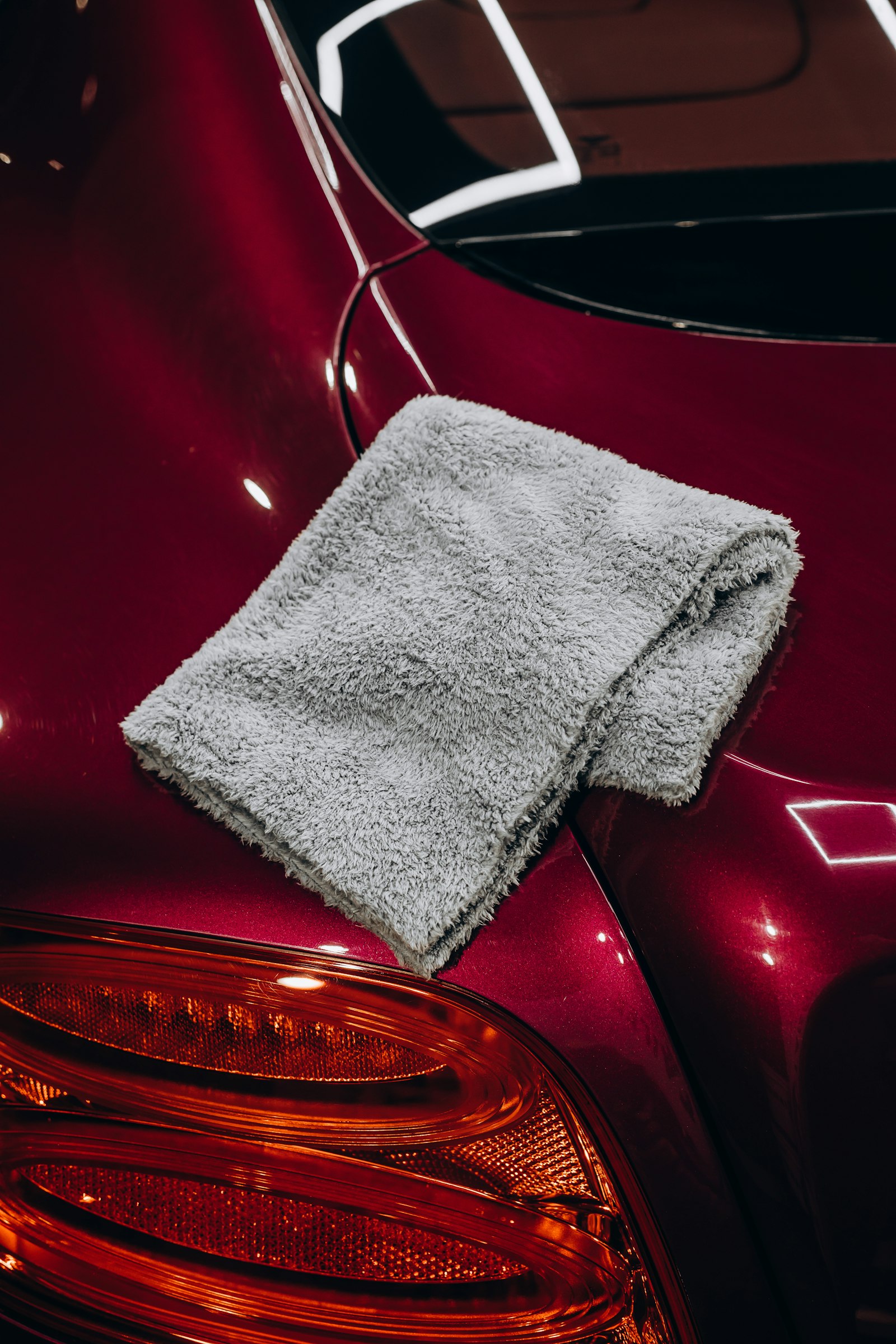
Sort towels by task, wash them separately from cotton without fabric softener, dry low and replace on evidence. If you are starting from zero, a 12-pack of general-purpose towels is the honest first buy — the premium tier earns its place later, on paint. The care label does most of the work.
Sort the towels you already own
How many towels do you need, and for which jobs? Microfiber towels are not interchangeable: weave and pile decide whether a towel suits paint, glass, wheels or interiors, and makers publish the intended job for each line. Group your towels by task — the first wash kit guide lists the typical jobs — and set aside any that have already survived a wheel or tire job.
A wash cycle mixes whatever is in the drum. Towels that picked up brake dust, road grit or wheel cleaner should not share water with the towels you plan to use on paint next weekend. Sorting before the wash is the step that protects the towels you care about.
| Check this | Why it changes the choice |
|---|---|
| Wash separation | Cotton and lint from mixed loads clog microfiber and defeat its pick-up. |
| Detergent type | Softeners and additives coat the fiber and reduce absorbency. |
| Water temperature | Manufacturer instructions give the safe range for the exact towel. |
| Drying method | High heat can set or melt fibers; makers specify the safe setting. |
Wash separately, skip the softener
The Rag Company’s washing instructions call for warm or cold water with a microfiber-safe detergent, towels washed separately from cotton, and no fabric softener, with an extra rinse where possible. These are manufacturer care instructions for their towels, and the same patterns appear across commercial laundry guidance for microfiber.
Fabric softener is the standard failure point: it is designed to coat fibers, which is exactly what microfiber relies on not happening. If a towel was washed with softener once, an extra rinse may recover it; repeated exposure usually ends its useful life on paint. Sort and store the survivors by task — the storage guide shows the shelf system.
Dry low and store by task
Maker guidance and commercial laundering guides agree on low heat or air drying for microfiber, because high heat hardens fibers over time. A towel that comes out of the dryer stiff or crunchy has usually taken that damage on board.
Storage continues the sorting you did before the wash. The Rag Company’s storage guidance separates towels by category, which prevents cross-contamination between paint, glass, wheels and interior jobs and makes the right towel easy to reach mid-wash.
When to replace a towel
No manufacturer publishes a universal wash-count limit, because use conditions differ. The practical replacement signals are visible: towels that stay stiff after correct washing, keep an odor, snag on every surface, or shed lint onto clean glass have stopped performing. The budget multipacks currently topping the category bestseller shelf — one 12-pack example sits around $8 — make the demote-and-replace cycle cheap enough to run honestly.
Keep the working towels for the jobs that matter and demote survivors to wheels, tires and door jambs. That ladder uses the towel’s remaining life where scratches matter least, and it makes the next multipack purchase a considered one instead of a panicked one.
Which towel for which job
Sort towels by task before they enter the wash — the assignment happens at purchase and at the shelf, not mid-job.
| Task | Towel traits to look for |
|---|---|
| Washing paint | Soft edge or terry towel with plenty of pile; dedicate it to paint only. |
| Glass and displays | Low-pile, lint-free weave; keep it separate from wax or dressing towels. |
| Wheels and tires | Your oldest paint-safe towels, demoted — never returned to paint duty. |
| Interior wipe-downs | General-purpose terry works; match any cleaner to the surface first. |
Common questions
Can I wash microfiber towels with regular laundry?
Wash them separately, especially from cotton. Cotton lint sheds onto microfiber and clogs the fiber structure, and manufacturer care guidance — The Rag Company’s included — calls for a dedicated wash with microfiber-safe detergent. Towels that have cleaned wheels or tires should be washed apart from paint towels as well.
Why is fabric softener bad for microfiber?
Fabric softener works by coating fibers, which is exactly what microfiber relies on not happening; the coating reduces the pick-up and absorbency the towels are bought for. One softener wash may be recoverable with an extra rinse, but repeated exposure usually ends the towel’s paint-safe life.
What temperature should I wash microfiber at?
Follow the maker’s stated range — The Rag Company specifies warm or cold water with microfiber-safe detergent, plus an optional extra rinse. High dryer heat is the other common failure: it hardens fibers over time, so dry low or hang dry, then store towels by task category.
Sources & research notes
This guide draws on the published material below. We have not performed a hands-on or long-term test of the products discussed. Check current instructions for the exact product and your vehicle.
- The Rag Company: how to wash microfiber towels
- The Rag Company: storing microfiber towels by category
- Kleen-Rite: microfiber washing and care guide for detailers
- USANOOKS: 12-pack microfiber listing (observed November 4, 2026)